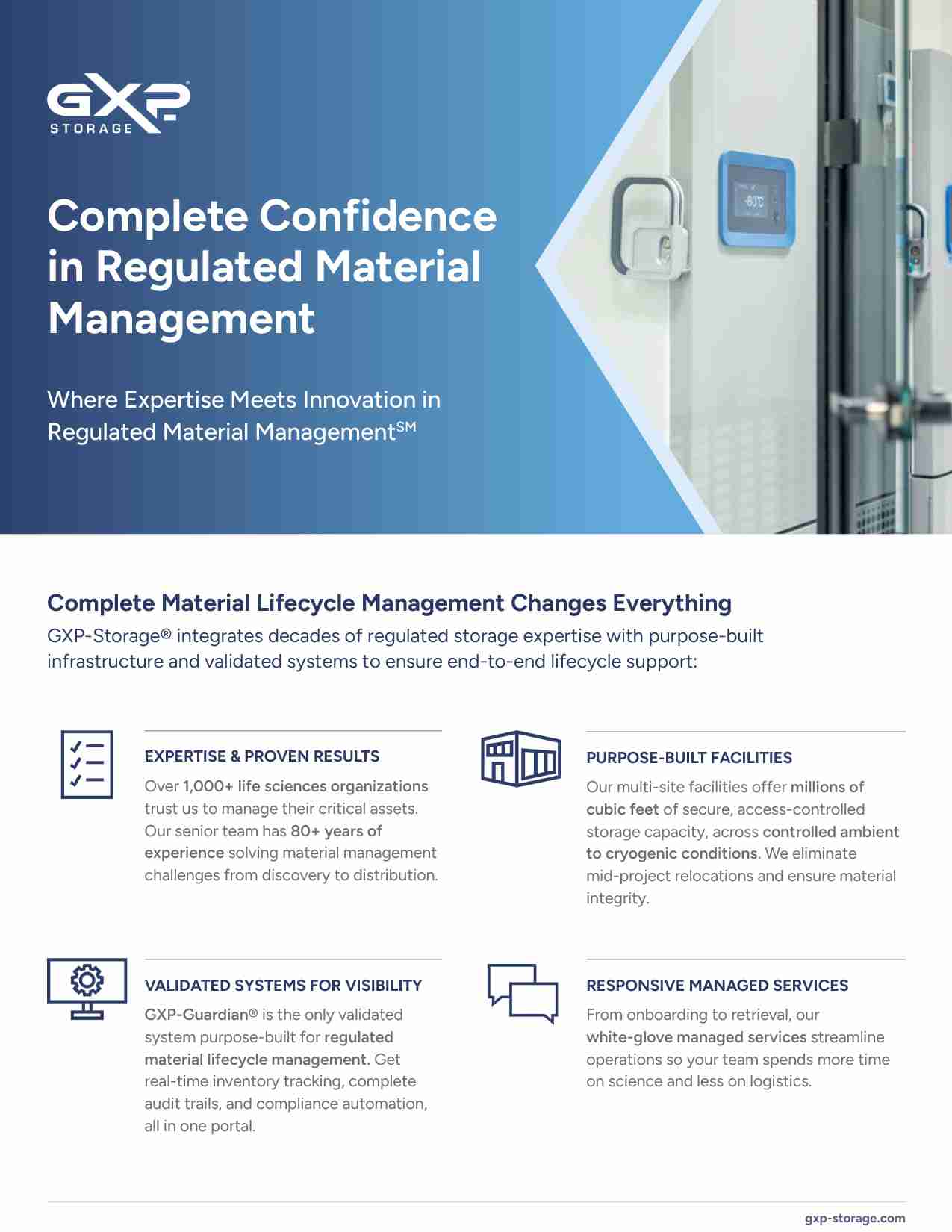
In the life sciences and pharmaceutical industries, ensuring the safety and efficacy of regulated material and products is crucial. Good Manufacturing Practice (GMP) storage plays a vital role in maintaining the quality of pharmaceuticals, medical devices, and even raw ingredients and materials.
GMP is a comprehensive regulatory framework that governs the entire manufacturing process, including storage. GMP storage refers to the specific guidelines and practices for storing pharmaceutical and life science products under controlled, secure conditions to maintain efficacy and longevity. These controls prevent contamination, degradation, and mix-ups, all of which can have dire consequences threatening public health as well as the reputation of the stakeholders.
Why Do we Have GMP Storage Regulations?
Throughout history, there have been multiple tragic incidents caused by improper testing, validation, and storage of pharmaceutical products.
One example comes from Europe in 1962 when a new drug, thalidomide, was used to treat pregnant women with morning sickness. Later in 1962, Thalidomide was related to thousands of birth defects in babies, spurring the creation of further drug testing protocols.
This incident, in addition to others, led to stricter regulations and the first set of GMP guidelines being published in the EU GMP EudraLex volume 4 in the 1970s to ensure safety in medicinal products for human and veterinary use.
After the thalidomide tragedy, the World Health Organisation (WHO) published GMP guidelines in 1969. Later in 1972, the Federal Drug Administration (FDA) created the following GMP regulations:
- 21 CFR Part 210: Current Good Manufacturing Practice in Manufacturing, Processing, Packing, or Holding of Drugs
- 21 CFR Part 211: Current Good Manufacturing Practice for Finished Pharmaceuticals
Why is GMP Storage Important?
GMP Storage plays the critical role of preserving regulated material and finished goods to ensure the safety of consumers. When moving goods into a dedicated GMP facility, regulated material should be secure, tracked, validated, and kept in its required storage environment. Here’s why GMP Storage is important:
Preserving Product Integrity: Maintaining precise temperature, humidity, and light levels is essential for many life science and pharmaceutical products. Deviations from these parameters can impact potency, stability, and effectiveness. For example, vaccines exposed to heat can lose their immunizing properties.
Security & Compliance: GMP regulated material must be safeguarded from both internal and external threats. Security measures ensure that GMP storage facilities are restricted access and follow stringent SOPs to protect regulated material. In addition, facilities need 24/7 operations, emergency back-up systems, and redundant capacity.
Preventing Contamination: Strict adherence to GMP storage protocols minimizes the risk of contamination. This includes preventing exposure to microorganisms, dust, pests, moisture, or other external factors that could compromise product sterility. Contaminated pharmaceuticals can lead to serious health risks for patients.
Ensuring Product Consistency: Controlled storage environments guarantee that products maintain their intended properties throughout their shelf life. This consistency is critical for guaranteeing the predictable performance of medications and the reliability of research materials.
Maintaining Traceability: GMP storage emphasizes meticulous record-keeping. Documenting storage conditions, stock movements, and expiration dates allows for complete product traceability. This is crucial for investigations, recalls, and regulatory compliance with agencies like the FDA. Failure to meet GMP storage requirements can result in significant consequences, including product recalls and financial penalties.
Implementing GMP Storage Solutions
Specific GMP storage practices vary depending on the product. Here are some key aspects for life sciences and pharmaceuticals:
Temperature-Controlled Storage: Many life science materials and pharmaceuticals require specific temperatures, ranging from ultra-cold freezers for vaccines to controlled room temperature for certain medications or medical finished goods. Some facilities offer storage environments as cold as cryogenic (-150°C).
Humidity Control: Maintaining appropriate humidity levels prevents moisture-related degradation, ensuring the stability of sensitive products. Refrigerators and freezers must be monitored and serviced to stay vigilant of any moisture.
Labeling and Tracking: Clear labeling and fully validated chain of custody procedures ensure that regulated material is located exactly where the system says it should be. Paper is still the predominant tracking method, but expert facilities that specialize in GMP storage react quicker and more accurately with digital records.
Quarantine: If there is risk of contamination, facilities need space to quarantine materials and protect the rest of the GMP material until proven otherwise.
Pest Control Measures: Implementing a robust pest control program safeguards products from contamination by insects or rodents. Cutting edge buildings are designed and built with pest control in mind from the beginning and significantly reduce pests.
Summary
GMP storage is an essential element in the life sciences and pharmaceutical industries. It ensures the safety, efficacy, and consistency of products, ultimately protecting patient health and research integrity. By adhering to stringent GMP storage practices, companies can build trust with regulatory bodies and deliver life-saving treatments and research materials with confidence.
For more details on the upstream and downstream management of GMP material, check out this article.